In our last meeting, we read a
short story about Francis of Assisi preaching to a wolf that was at odds with a local village. Francis asked the wolf to repent of his ways (he had been eating some of the villagers!) and make peace with the village. The wolf
listened to Francis; he promised to be gentle. The villagers, in turn, promised to feed the wolf for the rest of his days.
In our discussion of this fun little story, we asked the question of why Francis would preach to the animals. The best answer that we came up with was this: the gospel is good news to all creation. In its original state, all creation lived in peace and harmony. In its current state, however, all creation is broken. The creation is, as Paul says, "groaning in labor pains" (Rm. 8:22). Christ initiated a peacable kingdom which is bringing about a restoration of the broken creation. St. Francis believed that there will come a time when the kingdom will be fulfilled, and all creation will be restored to its original harmony. His preaching to the animals is a hopeful anticipation of that time. His life is a testament to the fact that we need to, as best we can in the here and now, live in harmony with God's creation.
Interestingly, John Wesley held a similar belief about the restoration of all creation: "Will the creature, will even the brute creation, always remain in this deplorable condition? God forbid that we should affirm this; yea, or even entertain such a thought. While the 'whole creation groaneth together,' their groans are not dispersed into idle air, but enter the ears of Him that made them...The whole brute creation will then, undoubtedly, be restored...whatever affections they had in the garden of God, will be restored with vast increase...They will be delivered from all irregular appetites...no rage will be found in any creature, no fierceness, nor cruelty, or thirst for blood." (The Great Deliverance).
If this is how creation will be restored in the end, then how should we relate toward creation in the here and now? How could we imitate the Fransican spirit with specific practices of environemtnal stewardship?
 The Reformation Era

 Both Thomas a' Kempis and Francis of Assisi emphasized the importance of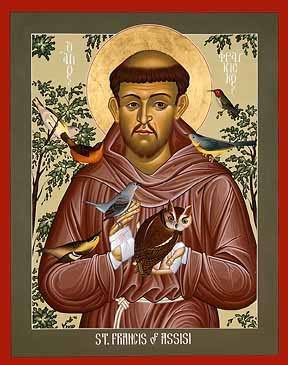
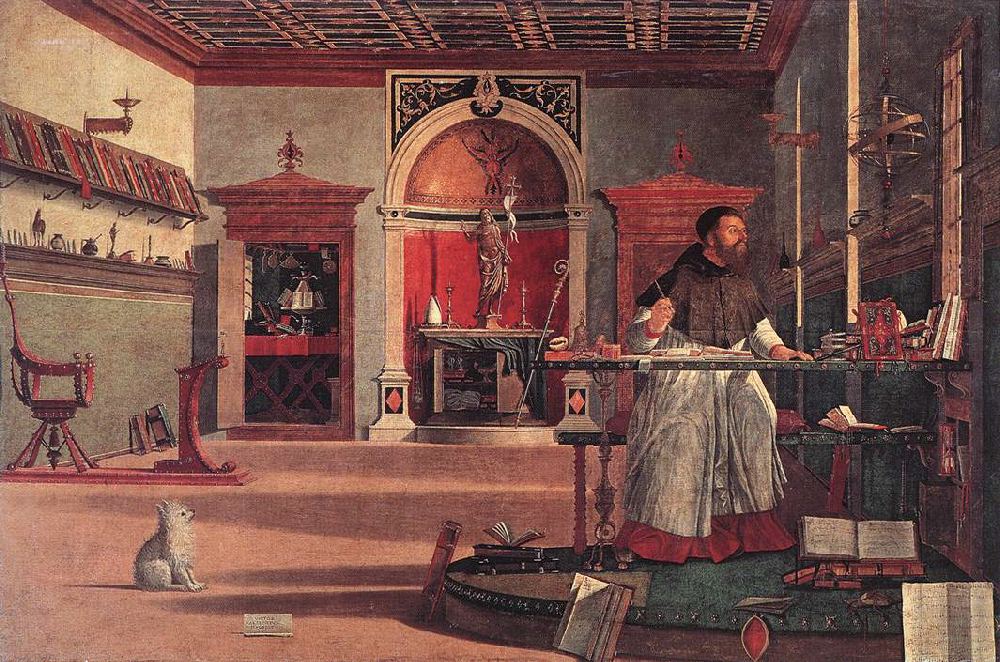
 As we discussed in our second meeting, Augustine believed that evil is a privation of good. Like darkness is the absence of light or cold is the absence of heat, evil is nothing in itself, but simply an absence of a good thing. Augustine summarizes his position in the Confessions: "If things are deprived of all good, they cease altogether to be; and this means that as long as they are, they are good. Therefore, whatever is, is good; and evil, the origin of which I was trying to find, is not a substance, because if it were a substance it would be good…So it became obvious to me that all that you have made is good, and that there are no substances whatsoever that were not made by you " (7.12).